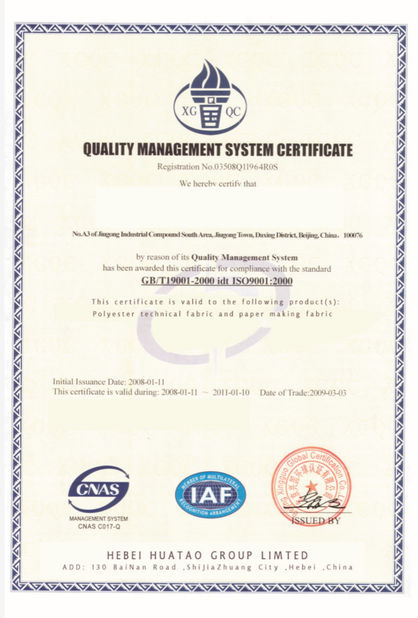
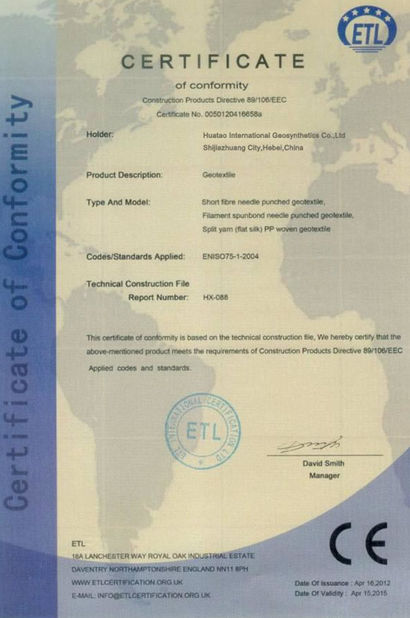
Het Huataobedrijf is een zeer goed bedrijf, ben ik zeer bereid om met u samen te werken, veilig, efficiënt, professioneel, eerlijk, gelukkig! Dank u voor het voorzien van me van de stabiele dienst en producten. -EUROPAT
—— INDUSTRIËLE EUROPT
Ik ben online Chatten Nu
Bedrijf Nieuws
What Type of Rollers Are Required for Thermoplastic Prepreg Production Lines?
What Rollers Does a Thermoplastic Prepreg Line Need?
A thermoplastic prepreg production line needs four roller families: heated impregnation and consolidation rollers (typically induction-heated calender rolls) that melt the matrix and press it into the fiber bed; low-inertia guide and idler rollers that protect fragile fibers; cooling or chill rollers that solidify the sheet at a controlled rate; and winding, nip and slitting rollers for conversion. Each roller must hold under-load temperature uniformity, resist fiber abrasion and be accepted against measurable criteria — runout, dynamic balance, Ra and surface uniformity.
·Induction-heated calender rolls hold ±1–2 °C cross-face and reach temperature in minutes
·Carbon fiber abrasion demands ceramic or hardened chrome surfaces in contact zones
·Size cooling rollers for the worst case: maximum output and summer coolant temperature
·Accept rollers on measured data, not nominal dimensions
Summary Table
| Item | Description |
|---|---|
| Function | Melt, impregnate, consolidate and solidify fiber-polymer webs |
Material
Hardened steel, chilled iron, chrome/ceramic coated shells; CFRP for guiding
Service Life
3–10 years depending on abrasion, coating and maintenance
Definition: Thermoplastic Prepreg Production and Its Roller Chain
Thermoplastic prepreg combines continuous fibers (carbon, glass, aramid) with thermoplastic matrices (PEEK, PEKK, PPS, PA, PP) by melting the polymer and pressing it into the fiber bed — then solidifying it at a controlled rate. The line therefore runs the complete web-handling chain: unwinding, web guiding, impregnation, calendering/consolidation, cooling, winding, slitting and inspection. Rollers are the working surface of every stage, and the full program for this sector is organized in the Composite Material Industry hub.
Working Principle: What Each Roller Family Does
Unwinding and guiding. Fiber tows tolerate almost no elongation. Low-inertia roller construction — the principle behind Composite Roller designs — cuts rotational inertia dramatically versus steel, preventing tension spikes during acceleration.
Impregnation. Applicator rollers, metering rollers and doctor blades hold a precise gap through which molten polymer is forced into the fiber bed. Hard chrome or ceramic coatings survive the combination of hot polymer and abrasive fiber.
Consolidation and calendering. The heated nip removes voids and sets thickness. Surface temperature — measured at the roll face under load, not at standstill — is the decisive parameter: PEEK needs roughly 380–400 °C at the surface, PPS and PA less. Induction Heat Calender Roll designs reach working temperature in minutes, hold ±1–2 °C across the face and respond instantly when the line switches polymers — advantages documented in Electromagnetic Induction Heating Rolls: Principle and Performance. Shell stiffness matters just as much: a shell that flexes under nip load produces a cross-width thickness gradient no controller can fix, which is why deflection-compensated chilled iron and forged steel shells — construction also used in precision Casting Roll products — are the standard.
Cooling. Hot prepreg must solidify at a controlled rate to lock in polymer morphology. Film-industry cooling engineering transfers directly: the sizing logic used for BOPP Chill Roll and PRS Cooling Roll equipment applies to composite tape with adjusted heat-load calculations.
Winding and slitting. Dynamically balanced rollers and rubber-covered nips protect the finished tape and wound package; clean slitting protects tape edge quality for later automated placement.
Benefits of Correct Roller Specification
·Void-free laminates through under-load temperature uniformity
·Faster polymer changeovers with induction heating
·Multiplied roller life in fiber-contact zones via ceramic and hardened coatings
·Higher line speeds from low-inertia guiding
·Lower total cost of ownership through documented acceptance criteria
Applications
·Aerospace clips, brackets and stiffeners
·EV battery enclosures and thermal barriers
·Hydrogen pressure vessel liner tape
·Oil & gas composite tubing
·Sports equipment and automotive panels
Industry Application Matrix
| Industry | Matrix | Critical Rollers | Special Requirement |
---
---
---
---
EV / Battery
PPS / PA
Impregnation, consolidation and cooling rollers
Fire-resistant matrix handling
Hydrogen storage
PA / PP liner tape
Tape casting and winding rollers
Thin-tape thickness tolerance
Oil & Gas
PA / PPS wide web
Deflection-compensated consolidation rolls
Width compensation
Sports / Consumer
PP / PA
High-speed chill and guide rolls
Cosmetic surface finish
Each row of this matrix hides the same engineering logic: the thinner and faster the web, the more temperature uniformity and low inertia dominate the specification; the wider and heavier the web, the more shell stiffness and deflection compensation dominate. Reading your own row honestly is the fastest way to a correct RFQ — and the Composite Material Industry hub groups the roller families by exactly these industry needs.
Application Comparison: Induction vs Oil-Heated Consolidation Rolls
| Criterion | Induction Heated Roll | Oil Heated Roll |
|---|---|---|
| Heat-up time | Minutes | 1–2 hours |
| Cross-face uniformity | ±1–2 °C typical | ±3–5 °C typical |
| Response to load change | Immediate | Slow |
| Changeover between polymers | Fast | Slow |
| System complexity | Power electronics | Boiler, piping, pump |
Best fit
Thin tape, multi-grade lines
Thick laminate, steady duty
The choice should follow the product mix, not fashion. A line dedicated to one thick laminate grade can run economically on oil heating; a line producing several tape grades — or thin aerospace-grade tape — recovers the induction investment through uptime and yield, for the reasons detailed in Electromagnetic Induction Heating Rolls: Principle and Performance.
Material Comparison
| Material / Coating | Best For | Key Advantage | Watch Out For |
1. Define the process chain first— previous, current and next process for every roller position, exactly as suppliers like HUATAO Industrial Rolls structure their quotations.
2. Specify under-load temperature uniformity for heated positions (±1–2 °C is the working standard for thin tape).
3. Size cooling for the worst case— maximum throughput, maximum areal weight, highest seasonal coolant temperature — and require the supplier's heat-removal calculation.
4. Choose surfaces for the fiber— ceramic or hardened chrome wherever fiber contacts the roll.
5. Write acceptance criteria into the contract— runout, dynamic balance grade, Ra, cylindricality, coating thickness, uniformity under load.
Procurement Guide
Provide suppliers with: polymer matrix and melt window; fiber type and areal weight; width, thickness and speed ranges; nip pressure and deflection limits; utilities and summer coolant temperature. Verify: manufacture-to-drawing capability, material certificates, dynamic balance and runout reports, Ra and coating-thickness reports, OEM replacement support, export experience, and wear-life recommendations. MOQ is normally one piece; lead time 45–90 days; sea freight in fixed packaging is standard. This contract-first approach — demonstrated in the Chrome-Plated Chill Rolls: South American 7.4m BOPP Case— is the template for disciplined Thermoplastic Prepreg Rolls procurement.
Failure Analysis
| Problem | Possible Cause | Recommended Solution |


 Uw bericht moet tussen de 20-3.000 tekens bevatten!