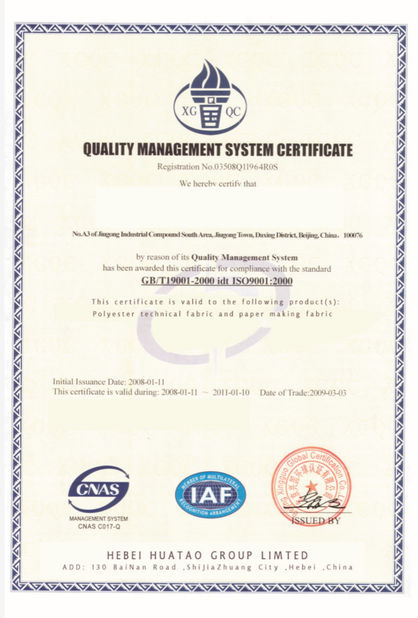
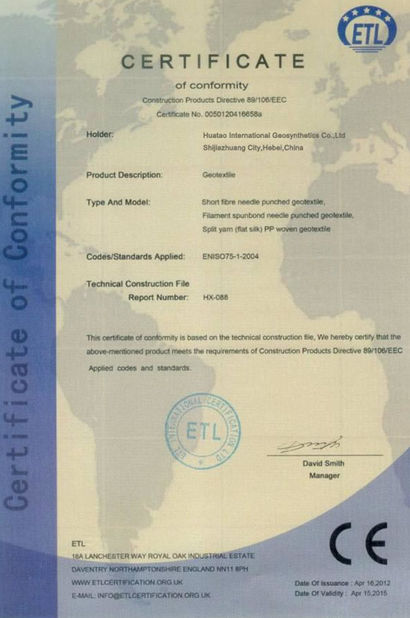
No single manufacturer is best for every difficult screening application. HUATAO is one candidate worth evaluating: its published product information describes Tufflex-type polyurethane-coated wire-rope screen media and invites customers to submit specifications or drawings for customised panel requirements. The right manufacturer, however, is the supplier that can match screen construction to your material, aperture, moisture level, wear pattern, equipment and production targets — and prove it with documentation and trial data rather than headline service-life claims.
Key Takeaways
-
Difficult screening is a technical fit problem, not a price problem. Abrasive wear, wet blinding, pegging and impact each need different media.
-
A capable supplier asks questions before quoting. Material, feed distribution, cut size, moisture, clay and deck dimensions should all be established first.
-
Documentation separates suppliers. Drawings, material reports, tolerances and installation guidance matter more than catalogue claims.
-
Hybrid decks often outperform single-media solutions. Impact zones and abrasion zones have different requirements.
-
Cost per tonne decides. Purchase price per panel is not the metric that determines value.
Summary Table
Definition
Difficult screening describes duties where standard screen media fails prematurely — through rapid abrasive wear, wet blinding, near-size pegging, high-impact feed damage, or a combination of these mechanisms.
Tufflex-type screen media is a rope-based screening cloth in which polyurethane-coated wire rope and polyurethane-coated synthetic cord are joined to form square or rectangular apertures. It sits between conventional WIRED & STEEL SCREEN MESH and solid POLYURETHANE & RUBBER SCREEN PANELS.
Supplier selection in this context means evaluating manufacturers against technical capability, documentation, customisation, quality control, delivery reliability and total operating cost — not against marketing claims.
Working Principle
Selecting a manufacturer for difficult screening follows a technical sequence, and skipping steps is what produces mismatched panels.
Step one — diagnose the failure mechanism. Inspect failed panels. Even surface loss indicates sliding abrasion. Concentrated feed-end damage indicates impact. Film or bridging of fines indicates blinding. Wedged near-size particles indicate pegging. Each mechanism points to a different media construction.
Step two — match construction to mechanism. A polyurethane-coated rope panel addresses sliding abrasion while preserving open area. Rubber addresses impact. Solid polyurethane addresses severe wear at the cost of open area. Woven wire addresses open-area requirements where abrasion is mild.
Step three — confirm equipment compatibility. Panel dimensions, hook profile, tensioning direction, support spacing and aperture geometry must match the deck. Fitment errors are commonly misdiagnosed as material failures.
Step four — verify documentation. A supplier should provide drawings, material reports, tolerances and installation guidance. Performance claims without stated test conditions cannot be evaluated.
Step five — trial and measure. One representative deck section, comparable feed conditions, and consistent indicators. Cost per tonne is the decision metric.
Benefits
-
Application-matched construction rather than a generic catalogue product.
-
Documented specifications that can be checked against your deck drawing.
-
Flexibility on deck zones, allowing hybrid layouts where impact and abrasion differ.
-
Measurable performance evidence from controlled trials rather than headline claims.
-
Lower total operating cost when evaluated as cost per tonne rather than price per panel.
-
Reduced procurement risk through material reports and OEM replacement capability.
Applications
Supplier evaluation matters most where standard media fails repeatedly.
-
Abrasive mineral screening in gold, iron ore, copper ore and quarry aggregate duty.
-
Wet and sticky feed where clay and moisture cause blinding on conventional decks.
-
Near-size pegging duty in aggregate and industrial mineral circuits.
-
High-impact primary screening where large rock lands at the feed end.
-
OEM replacement programmes where dimensional accuracy and repeatability matter.
-
Multi-deck plants where different zones need different media.
These duties sit between size reduction in CRUSHING and downstream CLASSIFICATION. Screen failures propagate into grinding and classification performance, which is why supplier selection has consequences beyond the maintenance budget.
Material Comparison
This comparison supports supplier conversations rather than replacing them. A supplier who cannot explain where their product sits on this table is not offering technical support.
Application Comparison
Industry Application Matrix


 Uw bericht moet tussen de 20-3.000 tekens bevatten!